
 Book Appointment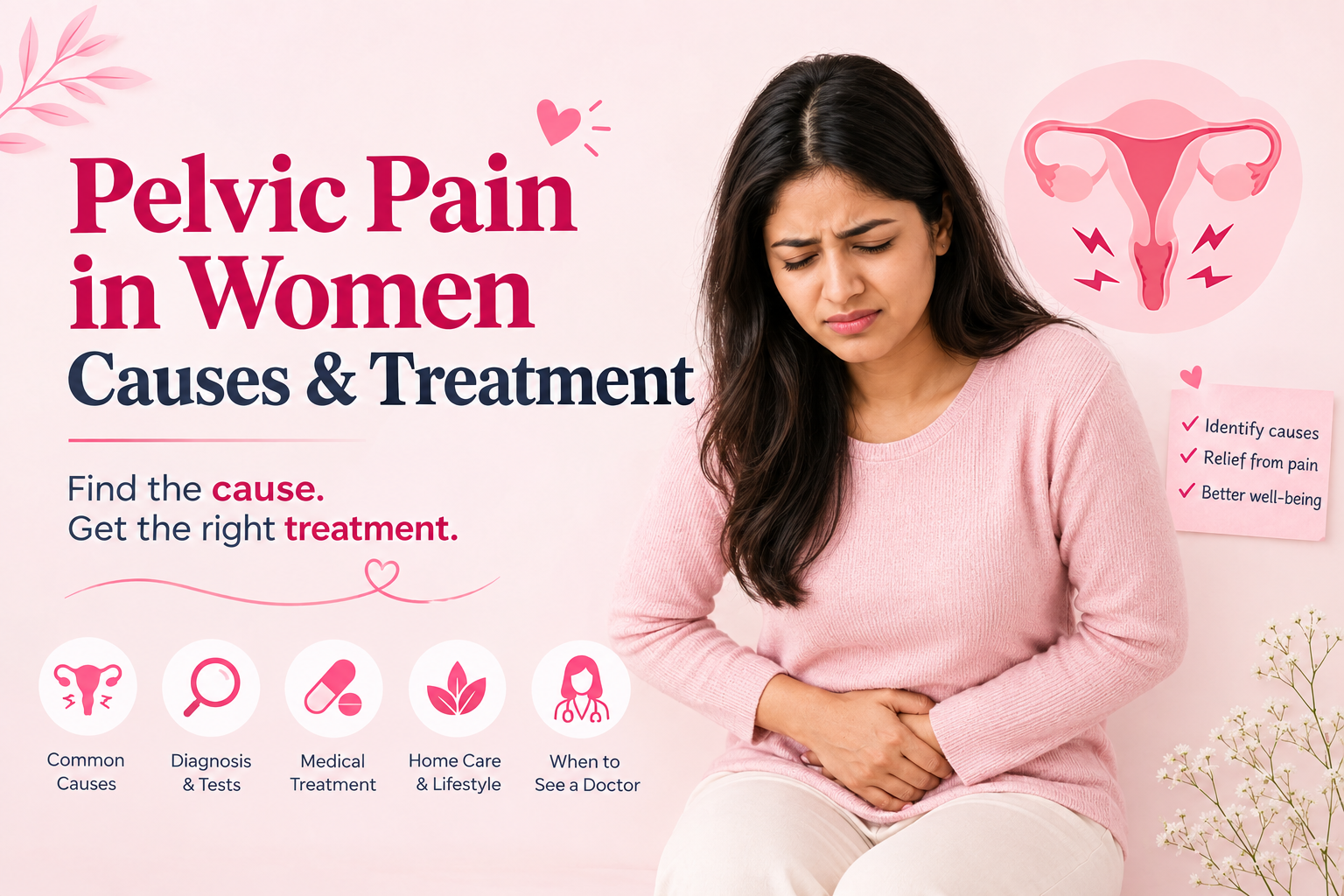
Pelvic pain is a common concern among women. It is usually felt in the lower abdomen, below the belly button, or between the hips. The pain may be mild or severe, sharp or dull, and may come and go or continue for a long time.
Sometimes pelvic pain is related to periods, but it can also be caused by conditions affecting the uterus, ovaries, urinary system, digestive system, or pelvic muscles. Understanding the cause is important for getting the right treatment.
Common Causes of Pelvic Pain in Women
- Period Pain
Mild cramps during periods are common. However, severe menstrual pain that affects work, sleep, exercise, or daily activities should not be ignored.
Severe period pain may sometimes be linked to endometriosis, adenomyosis, or fibroids.
- Endometriosis
Endometriosis occurs when tissue similar to the uterine lining grows outside the uterus. It can cause inflammation and pelvic pain.
Common symptoms include:
- Painful periods
- Pelvic pain throughout the month
- Pain during sexual intercourse
- Pain during bowel movements
- Heavy periods
- Difficulty becoming pregnant
Treatment depends on the severity of symptoms and the woman’s pregnancy plans.
- Adenomyosis
Adenomyosis occurs when tissue similar to the uterine lining grows into the muscular wall of the uterus. It may cause:
- Heavy menstrual bleeding
- Painful periods
- Pelvic heaviness
- Lower abdominal pain
- Pain during intercourse
Treatment may include medicines, hormonal treatment, or surgery in selected cases.
- Ovarian Cysts
Ovarian cysts are fluid-filled sacs that develop in or on the ovaries. Many cysts disappear without treatment, but some may cause pain or pressure.
Symptoms may include one-sided pelvic pain, bloating, pain during sex, or irregular periods.
Sudden severe pelvic pain with vomiting or dizziness needs urgent medical attention.
- Fibroids
Fibroids are non-cancerous growths in the uterus. They may cause pelvic pressure, heavy periods, lower back pain, frequent urination, or discomfort during intercourse.
Treatment depends on the size and location of the fibroids, symptoms, age, and future pregnancy plans.
- Pelvic Infections
Pelvic inflammatory disease, urinary tract infections, and other infections may cause lower abdominal or pelvic pain.
Other symptoms can include:
- Fever
- Unusual vaginal discharge
- Burning while urinating
- Pain during sex
- Irregular bleeding
Timely treatment is important to prevent complications.
- Digestive or Pelvic Muscle Problems
Constipation, gas, irritable bowel syndrome, and other digestive problems can sometimes feel like pelvic pain.
Tight or weak pelvic floor muscles may also cause pain, especially after childbirth, during exercise, or during sexual intercourse.
Symptoms That Should Not Be Ignored
Consult a gynecologist if pelvic pain is:
- Severe or getting worse
- Repeatedly returning
- Affecting daily activities
- Associated with heavy bleeding
- Occurring during sexual intercourse
- Associated with unusual discharge
- Linked with urinary or bowel problems
- Present during pregnancy
- Associated with difficulty becoming pregnant
Sudden severe pelvic pain, fainting, dizziness, fever, vomiting, or pain with a possible pregnancy requires urgent medical evaluation.
How Is Pelvic Pain Diagnosed?
Your doctor will ask about the location, duration, severity, and timing of the pain. You may also be asked about your periods, pregnancy plans, urinary symptoms, bowel movements, and previous medical conditions.
Depending on your symptoms, the doctor may recommend:
- Pelvic examination
- Ultrasound scan
- Urine tests
- Blood tests
- Infection-related tests
- Further investigations when required
Finding the cause helps in choosing the most suitable treatment.
Treatment for Pelvic Pain
Treatment depends on the underlying cause. It may include:
- Pain-relief medicines as advised
- Hormonal treatment for period-related pain
- Antibiotics for infections
- Treatment for endometriosis or adenomyosis
- Monitoring or treatment of ovarian cysts
- Fibroid treatment
- Pelvic floor physiotherapy
- Lifestyle changes and stress management
Gentle exercise, proper sleep, hydration, a balanced diet, and a warm compress may help some women manage mild discomfort. However, home care should not replace medical evaluation when pain is severe or persistent.
Pelvic pain is not always just normal period pain. It may be a sign of endometriosis, adenomyosis, ovarian cysts, fibroids, infection, or another condition. Early diagnosis can help women receive the right treatment and avoid unnecessary discomfort.
If you are experiencing pelvic pain, painful periods, irregular bleeding, or other gynecological concerns, Dr. Swetha Madhuri at Swetha’s Gynecare can help identify the possible cause and guide you toward suitable treatment. Every woman’s symptoms, health history, and pregnancy plans are considered while planning care.
