
 Book Appointment
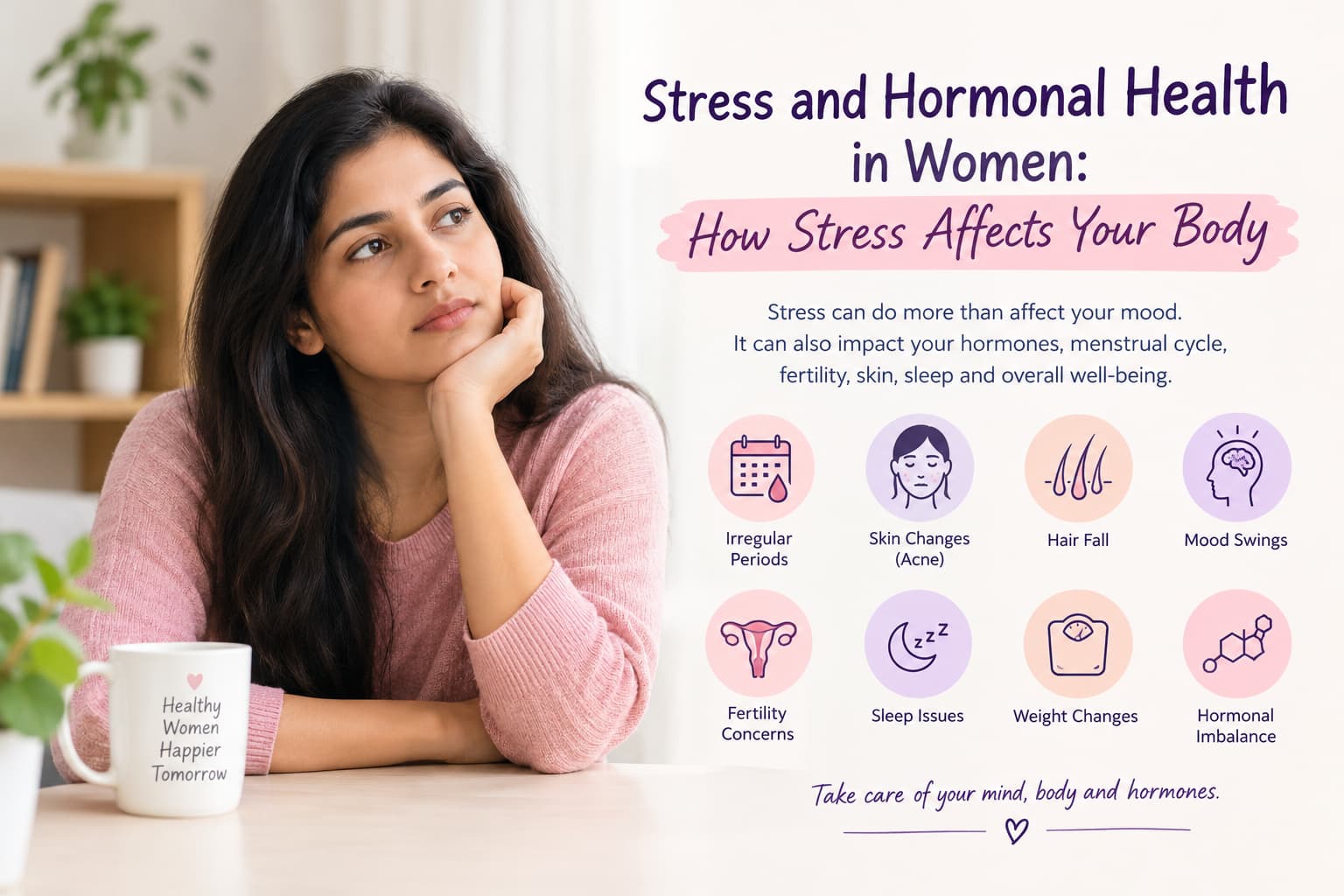
Have you ever noticed that your periods become irregular during a stressful time? Or that you experience more acne, mood swings, tiredness, or trouble sleeping when you have too much on your mind?
Stress is a normal part of life. Work pressure, family responsibilities, financial worries, lack of sleep, and personal challenges can affect how we feel every day. But when stress continues for a long time, it can also affect our physical health, including the way our hormones work.
Hormones play an important role in a woman’s body. They help regulate the menstrual cycle, support pregnancy, influence mood, and contribute to sleep, energy, and bone health. When you are under prolonged stress, these systems can be affected.
The good news is that understanding the connection between stress and hormonal health in women can help you recognise changes in your body and take steps towards better wellbeing.
What Is the Connection Between Stress and Hormones?
Hormones are chemical messengers that help different parts of your body work together. They influence many everyday functions, including your menstrual cycle, metabolism, sleep, mood, and reproductive health.
When you experience stress, your body releases hormones such as cortisol and adrenaline. These hormones help you respond to challenging situations. This is a normal and useful response in the short term.
However, when stress continues for weeks or months, your body’s stress response may remain active for longer than necessary.
Prolonged stress can affect sleep, appetite, energy levels, and the systems that regulate your menstrual cycle. It may also interfere with the hormonal signals involved in ovulation.
This does not mean that every hormonal problem is caused by stress. Conditions such as thyroid disorders, polycystic ovary syndrome (PCOS), and other medical issues can also affect hormone levels and should be considered when symptoms persist.
- Can Stress Make Your Periods Irregular?
Yes, prolonged or significant stress can affect your menstrual cycle.
Your menstrual cycle depends on communication between the brain and the ovaries. When the body experiences significant stress, this communication can be disrupted, potentially affecting ovulation and the timing of your period.
You may notice:
- Your period arriving later than expected
- A missed period
- Changes in your usual cycle length
- Periods becoming less predictable
- Changes in your usual menstrual symptoms
For some women, the cycle returns to normal when the stressful period passes. For others, irregular periods may have another underlying cause.
If your periods are repeatedly irregular or stop unexpectedly, consult a gynecologist. Do not assume stress is the only reason. If pregnancy is possible, take a pregnancy test as appropriate.
- Stress, PMS, and Mood Swings
Many women experience physical or emotional changes in the days before their period. These symptoms are commonly known as premenstrual syndrome (PMS).
Stress may make these symptoms harder to manage. You might feel more irritable, anxious, emotional, or tired than usual.
Common symptoms include:
- Mood swings
- Feeling anxious or overwhelmed
- Headaches
- Bloating
- Breast tenderness
- Difficulty concentrating
- Changes in sleep or appetite
Stress does not necessarily cause PMS, but poor sleep and ongoing emotional pressure may worsen how some women experience their symptoms.
If mood changes become severe or begin affecting your relationships, work, or daily life, speak with a healthcare professional. Severe premenstrual mood symptoms may need specific assessment and treatment.
- Can Stress Affect Fertility?
Stress and fertility can be connected, but the relationship is complex.
Significant or prolonged stress may affect the hormonal signals involved in ovulation. If ovulation becomes irregular, it can sometimes make it more difficult to predict the fertile days of your cycle.
Stress can also affect fertility indirectly by disturbing sleep, changing eating habits, reducing sexual desire, or making it harder to maintain healthy routines.
However, stress does not automatically cause infertility, and difficulty conceiving is not a woman’s fault.
Fertility depends on several factors, including age, ovulation, reproductive health, sperm health, and other medical conditions.
If you are planning a pregnancy and have concerns about irregular periods or difficulty conceiving, a gynecologist can help assess the possible causes and guide you on the next steps.
- Stress and PCOS: Is There a Connection?
Polycystic ovary syndrome (PCOS) is a common hormonal condition that can affect menstrual cycles, ovulation, skin, and hair growth.
Women with PCOS may experience irregular periods, acne, unwanted facial hair, or difficulty with weight management. Living with these symptoms can also create emotional stress.
At the same time, prolonged stress can affect sleep, eating habits, and overall metabolic health, which may make managing PCOS more challenging for some women.
It is important to understand that stress is not the sole cause of PCOS. PCOS involves several hormonal and metabolic factors, and it cannot be diagnosed based on stress or irregular periods alone.
If you have irregular periods, persistent acne, increased facial hair, or other concerns, consult a gynecologist for proper evaluation.
- Can Stress Cause Acne, Hair Fall, and Weight Changes?
Have you noticed more pimples during a difficult week or increased hair shedding after a stressful period?
Stress can affect the skin, hair, appetite, and daily habits. Some people eat more when stressed, while others lose their appetite. Poor sleep and changes in routine can also affect energy levels and weight management.
Stress may contribute to acne flare-ups in some people. Significant physical or emotional stress can also trigger a type of temporary hair shedding called telogen effluvium, which may become noticeable weeks or months after the stressful event.
However, acne, hair loss, and unexplained weight changes can have many causes, including thyroid problems, nutritional deficiencies, PCOS, and other conditions.
If these symptoms continue, worsen, or appear alongside menstrual changes, seek medical advice rather than assuming they are caused by stress alone.
- Stress, Sleep, and Hormonal Health
Sleep and hormonal health are closely connected.
When you are worried about work, family, or personal matters, you may find it difficult to fall asleep or stay asleep. Poor sleep can then affect your mood, appetite, energy, and ability to cope with stress.
Over time, this can become a cycle: stress affects sleep, and lack of sleep makes everyday stress feel more difficult.
To support better sleep, try to:
- Go to bed and wake up at similar times each day.
- Reduce screen use before bedtime.
- Avoid caffeine late in the day if it affects your sleep.
- Keep your bedroom quiet and comfortable.
- Make time to relax before going to bed.
If you regularly struggle to sleep despite making changes, speak with a healthcare professional.
- Simple Ways to Manage Stress and Support Hormonal Health
You do not need to make major lifestyle changes all at once. Small, realistic habits can help you manage stress and support your overall health.
Eat balanced meals
Try to include vegetables, fruits, whole grains, protein-rich foods, and healthy fats in your daily diet. Foods such as dal, beans, eggs, curd, nuts, seeds, and leafy greens can help provide important nutrients.
Avoid extreme diets or skipping meals regularly, especially if you are already feeling tired or stressed.
Make time for physical activity
Walking, stretching, yoga, swimming, or any activity you enjoy can help improve mood and support better sleep.
You do not need an intense workout every day. Start with a routine that fits comfortably into your schedule.
Practise relaxation
Take a few minutes each day to breathe slowly, listen to calming music, meditate, pray, or spend time outdoors.
The goal is not to eliminate every stressful situation. It is to find healthy ways to respond to stress.
Set realistic limits
Many women manage several responsibilities at once and often put their own needs last.
Try to make time for rest, ask for help when needed, and avoid expecting yourself to do everything perfectly.
Stay connected
Talking to a trusted friend, family member, or counsellor can help you work through difficult emotions. You do not have to manage everything alone.
Avoid self-medicating
Be cautious about supplements, herbal products, or medicines advertised as hormone-balancing treatments. Not all products are proven to be effective or safe. Speak with a qualified healthcare professional before starting them.
- When Should You See a Gynecologist?
Occasional stress is a normal part of life, but persistent symptoms should not be ignored.
Consider consulting a gynecologist if you experience:
- Repeatedly irregular or missed periods
- Periods that become unusually heavy or painful
- Persistent acne or increased facial hair
- Unexplained weight changes
- Ongoing hair loss
- Difficulty conceiving
- Severe PMS symptoms or significant mood changes
- Unusual tiredness or other symptoms that affect daily life
Your doctor may ask about your menstrual cycle, sleep, lifestyle, medical history, and symptoms. Depending on your situation, they may recommend a physical examination, blood tests, or other investigations.
Treatment depends on the underlying cause. Stress-management techniques may help, but they should not replace medical evaluation when symptoms suggest another condition.
If you feel persistently anxious, overwhelmed, or unable to cope with everyday activities, mental health support can also be helpful.
Final Thoughts: Take Care of Your Mind and Body
Stress is more than an emotional experience. When it becomes prolonged, it can affect sleep, energy, mood, menstrual cycles, and overall wellbeing. However, not every hormonal change is caused by stress, and persistent symptoms deserve proper attention.
Start with simple steps: eat balanced meals, get enough sleep, stay physically active, and make time for yourself. Most importantly, listen to your body and seek help when something does not feel right.
If you are experiencing irregular periods, PMS symptoms, PCOS-related concerns, fertility difficulties, or other changes in your hormonal health, Dr. Swetha Madhuri at Swetha’s Gynecare, Akshayanagar, Bengaluru, can help you understand your symptoms and guide you towards appropriate care. Whether you need a gynecologist in Bangalore, women’s health consultation, menstrual health guidance, pregnancy planning support, or PCOS evaluation, a personalised assessment can help identify the possible cause and determine the next steps.
Dr. Swetha Madhuri – Swetha’s Gynecare
- Location: Akshayanagar, Bengaluru
- Phone: +91 99454 49720
- Website: www.drswethamadhuri.com
