
 Book Appointment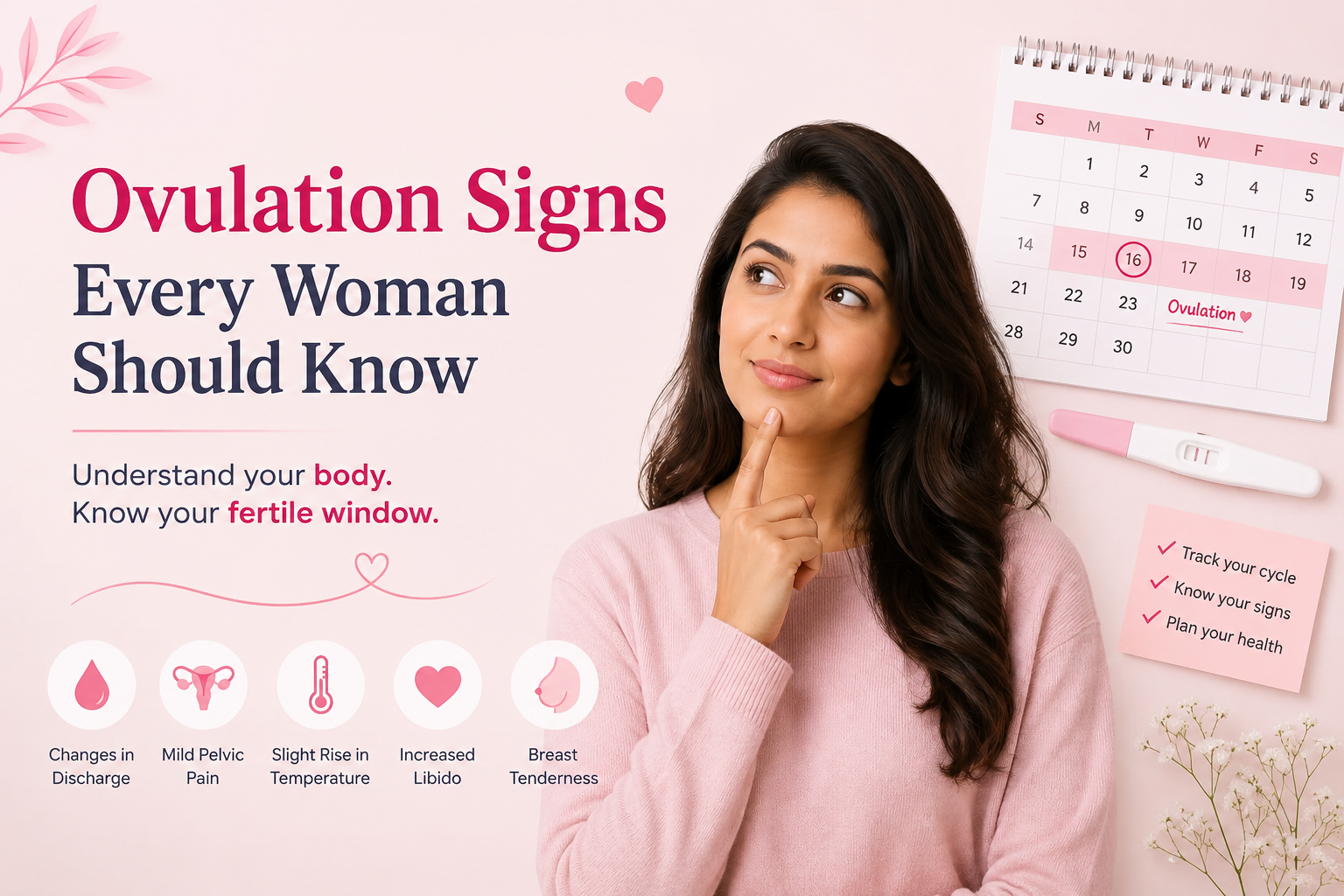
Ovulation is a natural part of the menstrual cycle, but many women are not sure when it actually happens. Understanding the signs of ovulation can help you become more aware of your menstrual cycle, understand your fertile days, and notice changes in your body.
Ovulation is the time when an ovary releases a mature egg. The egg can then be fertilized if sperm is present. For women who are trying to conceive, knowing the approximate time of ovulation can be particularly helpful.
But remember, every woman’s cycle is different. Ovulation does not always happen on exactly the same day every month.
What Happens During Ovulation?
During the menstrual cycle, hormones prepare the ovaries for ovulation. Usually, one mature egg is released from an ovary. Around this time, hormonal changes can cause some noticeable changes in the body.
Some women clearly notice these changes, while others may not feel anything at all. Both can be completely normal.
Here are some common signs that may occur around ovulation.
- Changes in Vaginal Discharge
One of the most noticeable signs of ovulation is a change in cervical mucus.
As ovulation approaches, vaginal discharge may become clear, slippery and stretchy, sometimes compared to the texture of raw egg white. This type of discharge helps sperm move more easily through the reproductive tract.
After ovulation, the discharge usually becomes thicker, stickier or less noticeable.
- Mild Lower Abdominal Pain
Some women experience mild pain or discomfort around the time of ovulation. This is sometimes called ovulation pain or mittelschmerz.
It may be felt on one side of the lower abdomen and can last for a short period or, in some women, longer.
Mild occasional discomfort can happen around ovulation, but severe or persistent pelvic pain should not simply be assumed to be ovulation pain.
- Increased Sexual Desire
Hormonal changes around ovulation may increase sexual desire in some women.
You may notice that you feel more interested in intimacy around the middle of your cycle. This can be one of the body’s natural ways of coinciding fertility with sexual desire.
Not every woman experiences this change, so it should not be used as the only way to identify ovulation.
- Breast Tenderness
Some women notice mild breast tenderness or sensitivity around ovulation.
Changes in hormones, particularly estrogen and progesterone, can affect breast tissue during different stages of the menstrual cycle.
If breast pain is severe, persistent, or associated with a lump or other unusual changes, it is better to discuss it with a doctor.
- Slight Increase in Basal Body Temperature
After ovulation, progesterone levels rise and can cause a small increase in your basal body temperature (BBT).
This change is usually very small, so it may not be something you can feel. Women who track their temperature every morning before getting out of bed may notice a pattern over several cycles.
BBT is more useful for confirming that ovulation has likely already occurred rather than predicting it in advance.
- Feeling More Energetic or Positive
Some women report feeling more energetic, active or positive around ovulation.
Hormonal fluctuations can influence mood and energy levels, although these changes are not the same for everyone.
You may notice these patterns if you regularly track your cycle and how you feel each month.
- Changes in Appetite or Mood
Hormonal changes throughout the menstrual cycle can sometimes affect appetite, mood and overall wellbeing.
Some women notice subtle changes around ovulation, while others do not notice any difference.
Keeping a simple menstrual-cycle diary can help you understand whether these changes happen regularly for you.
When Is Ovulation Most Likely to Happen?
Ovulation does not necessarily occur on Day 14 for every woman.
In a typical 28-day cycle, ovulation may happen around the middle of the cycle, but the exact timing can vary depending on the length and regularity of your periods.
Your fertile window includes the days leading up to ovulation and around the time of ovulation. Since sperm can survive for several days in the female reproductive tract, pregnancy can occur from intercourse before ovulation as well.
This is why simply counting days on a calendar may not always accurately identify your fertile days.
How Can You Track Ovulation?
If you are trying to understand your cycle or plan a pregnancy, you can track several things together:
- Your period dates
- Changes in cervical mucus
- Basal body temperature
- Ovulation predictor kits
- Changes in your body and symptoms
- Medical monitoring through ultrasound when required
Using more than one method can give you a better understanding of your cycle.
Can You Ovulate Without Noticing Any Signs?
Yes.
Some women have very few noticeable symptoms during ovulation. This does not necessarily mean that ovulation is not happening.
On the other hand, having symptoms that seem like ovulation does not always confirm that an egg has been released. Other conditions can sometimes cause similar symptoms.
If your periods are very irregular, you are not getting periods, or you have been trying to conceive without success, it may be worth checking whether you are ovulating regularly.
When Should You See a Gynecologist?
Consider speaking with a gynecologist if you have:
- Very irregular or unpredictable periods
- Periods that stop for several months
- Repeatedly missed periods
- Severe pelvic pain
- Difficulty conceiving
- Symptoms that suddenly change from your usual cycle
Sometimes irregular ovulation can be related to hormonal changes, thyroid problems, PMOS/PCOS, stress, significant weight changes or other reproductive health conditions. Finding the underlying reason is more important than simply trying to identify the day of ovulation.
Understanding Your Ovulation Can Help You Understand Your Body
Ovulation is only one part of your menstrual cycle, but learning its signs can help you understand your body better. Changes in discharge, mild pelvic discomfort, breast tenderness, temperature and other symptoms may give you useful clues about what is happening during your cycle.
However, there is no single sign that can confirm ovulation in every woman. If you are trying to conceive or have concerns about your periods or fertility, personalized medical advice can help you understand your cycle more accurately.
At Swetha’s Gynecare, Dr. Swetha Madhuri provides personalized gynecological and fertility care, helping women understand their menstrual cycles, ovulation and reproductive health. If you have irregular periods, concerns about ovulation, or are planning a pregnancy, a consultation can help identify the right approach for your individual needs.
