
 Book Appointment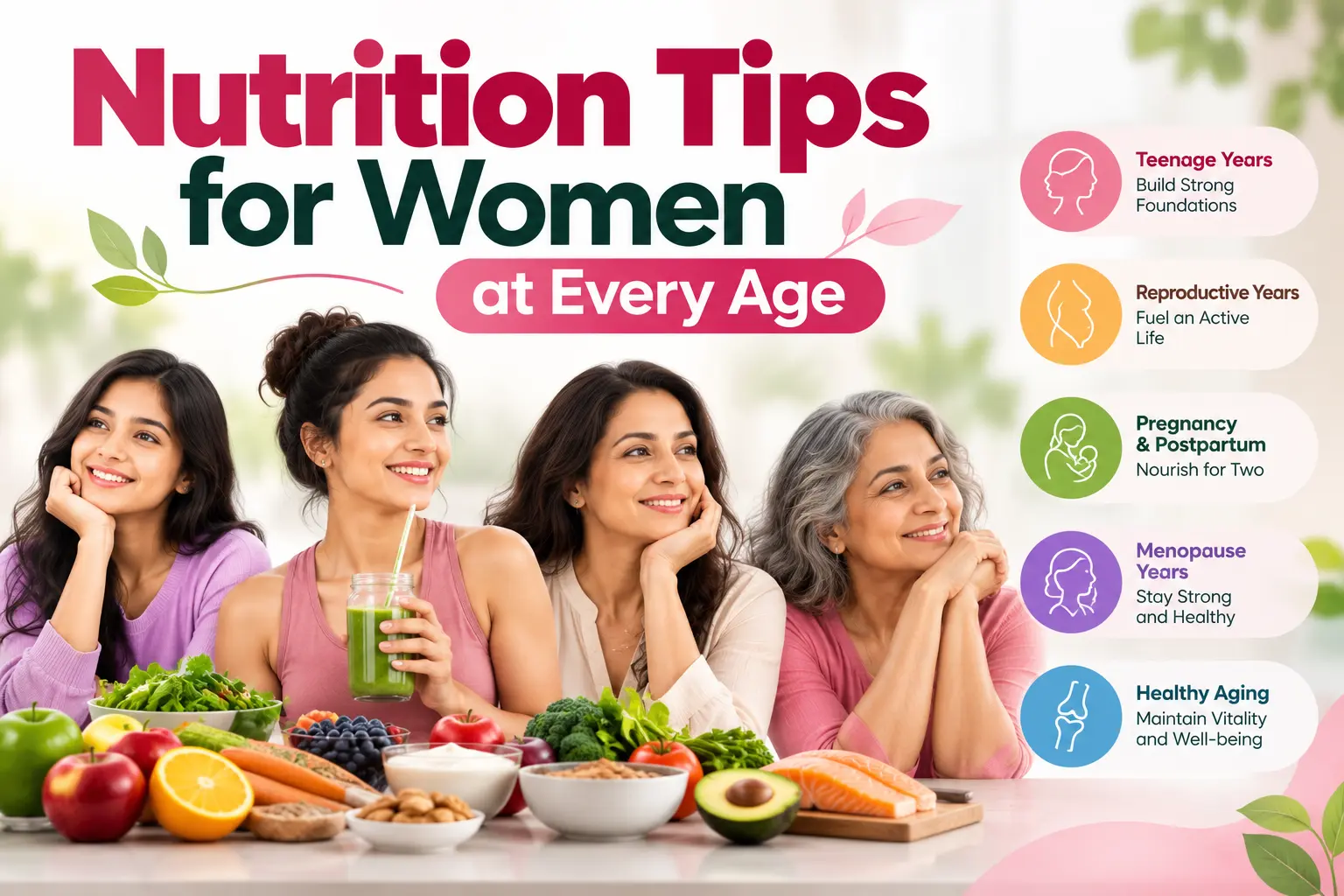
Good nutrition is important for women at every stage of life. Our nutritional needs can change with age, activity level, menstrual health, pregnancy, breastfeeding, and menopause.
Eating a balanced diet does not mean following a strict diet or avoiding all your favourite foods. It is about giving your body the right combination of protein, vitamins, minerals, healthy fats, carbohydrates, fibre, and enough water.
Here are some simple nutrition tips that can help women support their health at different ages.
Nutrition in Your 20s
Your 20s are an important time to build healthy eating habits that can benefit you for many years.
Focus on:
- Protein-rich foods such as eggs, dal, beans, paneer, fish, and lean meat
- Fresh fruits and vegetables
- Whole grains and millets
- Milk, curd, or other calcium-rich foods
- Nuts and seeds
- Plenty of water
Iron is especially important for women who have regular periods. Include foods such as leafy greens, beans, lentils, sesame seeds, dates, eggs, and lean meat as part of a balanced diet.
If you often feel tired, weak, or dizzy, speak with a doctor rather than assuming it is simply due to a busy lifestyle.
Nutrition in Your 30s
Women in their 30s often balance work, family, pregnancy planning, and other responsibilities. During this stage, maintaining a balanced diet becomes even more important.
Try to include:
- Protein with every main meal
- Plenty of vegetables
- Seasonal fruits
- Whole grains
- Healthy fats from nuts, seeds, and suitable cooking oils
- Calcium and vitamin D-rich foods
If you are planning pregnancy, nutrition becomes particularly important. Folic acid is recommended before and during early pregnancy, but the right supplement and dose should be discussed with your doctor.
Nutrition During Pregnancy
Pregnancy increases the body’s nutritional needs because you are supporting both your own health and your growing baby.
A healthy pregnancy diet should include:
- Protein-rich foods
- Fruits and vegetables
- Whole grains
- Calcium-rich foods
- Iron-rich foods
- Healthy fats
- Adequate fluids
Pregnancy is not a time to follow a restrictive weight-loss diet. Your doctor can guide you about healthy weight gain, supplements, and foods to include or avoid during pregnancy.
Nutrition While Breastfeeding
Breastfeeding can increase your energy and nutrient needs. Eating regular, balanced meals and drinking enough fluids can help support your health during this period.
Include a variety of:
- Protein-rich foods
- Vegetables and fruits
- Whole grains
- Milk, curd, or other calcium-rich foods
- Nuts and seeds
- Healthy fats
You do not need a complicated diet. A varied and balanced diet is usually the best approach.
Nutrition in Your 40s
As women move through their 40s, metabolism, activity levels, and hormonal patterns may change.
This is a good time to pay more attention to:
Protein: Helps maintain muscle strength.
Calcium and vitamin D: Important for maintaining bone health.
Fibre: Supports healthy digestion and can help with overall metabolic health.
Healthy fats: Include foods such as nuts, seeds, fish, and other healthy fat sources.
It is also helpful to reduce excessive sugary drinks, highly processed foods, and frequent fried foods.
Nutrition During Perimenopause and Menopause
During perimenopause and menopause, hormonal changes can affect sleep, mood, body weight, and bone health.
A balanced diet can support overall wellbeing during this transition.
Include:
- Calcium-rich foods
- Vitamin D sources
- Protein
- Fibre-rich vegetables and whole grains
- Fruits
- Nuts and seeds
- Healthy fats
Regular physical activity, particularly strength and weight-bearing exercises, can also support muscle and bone health.
Important Nutrients for Women
Iron
Iron is important for making healthy red blood cells. Women who have heavy menstrual bleeding may be at greater risk of iron deficiency.
Good food sources include leafy vegetables, lentils, beans, eggs, meat, and other iron-rich foods.
Calcium
Calcium is important for strong bones and teeth. Include foods such as milk, curd, paneer, ragi, sesame seeds, and other calcium-rich foods.
Vitamin D
Vitamin D helps the body absorb calcium and plays an important role in bone and muscle health. Your doctor may recommend testing or supplements if you are at risk of deficiency.
Protein
Protein supports muscles, tissues, and overall health. Include sources such as eggs, fish, chicken, dairy products, dal, beans, paneer, tofu, and nuts.
Fibre
Fibre supports digestion and can help maintain healthy blood sugar and cholesterol levels. Vegetables, fruits, whole grains, beans, lentils, and seeds are good sources.
Simple Healthy Eating Habits for Women
You don’t need to completely change your diet overnight. Small changes can make a difference.
- Don’t skip meals regularly.
- Add vegetables to your lunch and dinner.
- Choose whole grains more often.
- Include a protein source in each main meal.
- Choose fruit instead of frequently reaching for packaged snacks.
- Drink enough water throughout the day.
- Limit highly processed foods and sugary drinks.
- Avoid crash diets and extreme food restrictions.
- Stay physically active.
- Get enough sleep.
Does Every Woman Need Supplements?
Not necessarily.
Supplements such as iron, calcium, vitamin D, folic acid, or vitamin B12 may be recommended in certain situations, but they should not be taken routinely without understanding your individual needs.
Your age, diet, menstrual health, pregnancy status, medical history, and blood test results can all influence whether you need a particular supplement.
When Should You Talk to a Doctor?
Nutrition is closely connected with women’s overall health. Consider speaking with a healthcare professional if you experience:
- Persistent tiredness or weakness
- Very heavy periods
- Frequent dizziness
- Unexplained weight changes
- Hair loss
- Irregular periods
- Digestive problems
- Difficulty conceiving
- Nutritional deficiencies
- Concerns during pregnancy or breastfeeding
- Menopause-related health concerns
There is no single diet that works for every woman. Your nutritional needs can change throughout life, and what works during your 20s may not be the right approach during pregnancy, menopause, or later years.
The goal is not perfection. A balanced diet, regular physical activity, adequate sleep, and timely medical care can help support women’s health at every stage of life.
If you have concerns about women’s nutrition, menstrual health, pregnancy nutrition, fertility, PCOS, menopause, or overall gynecological health, Dr. Swetha Madhuri at Swetha’s Gynecare, Akshayanagar, Bengaluru, can help you understand your individual health needs and guide you appropriately. A personalized approach is especially important during pregnancy planning, pregnancy, postpartum care, and menopause, when nutritional and hormonal needs can change.
