
 Book Appointment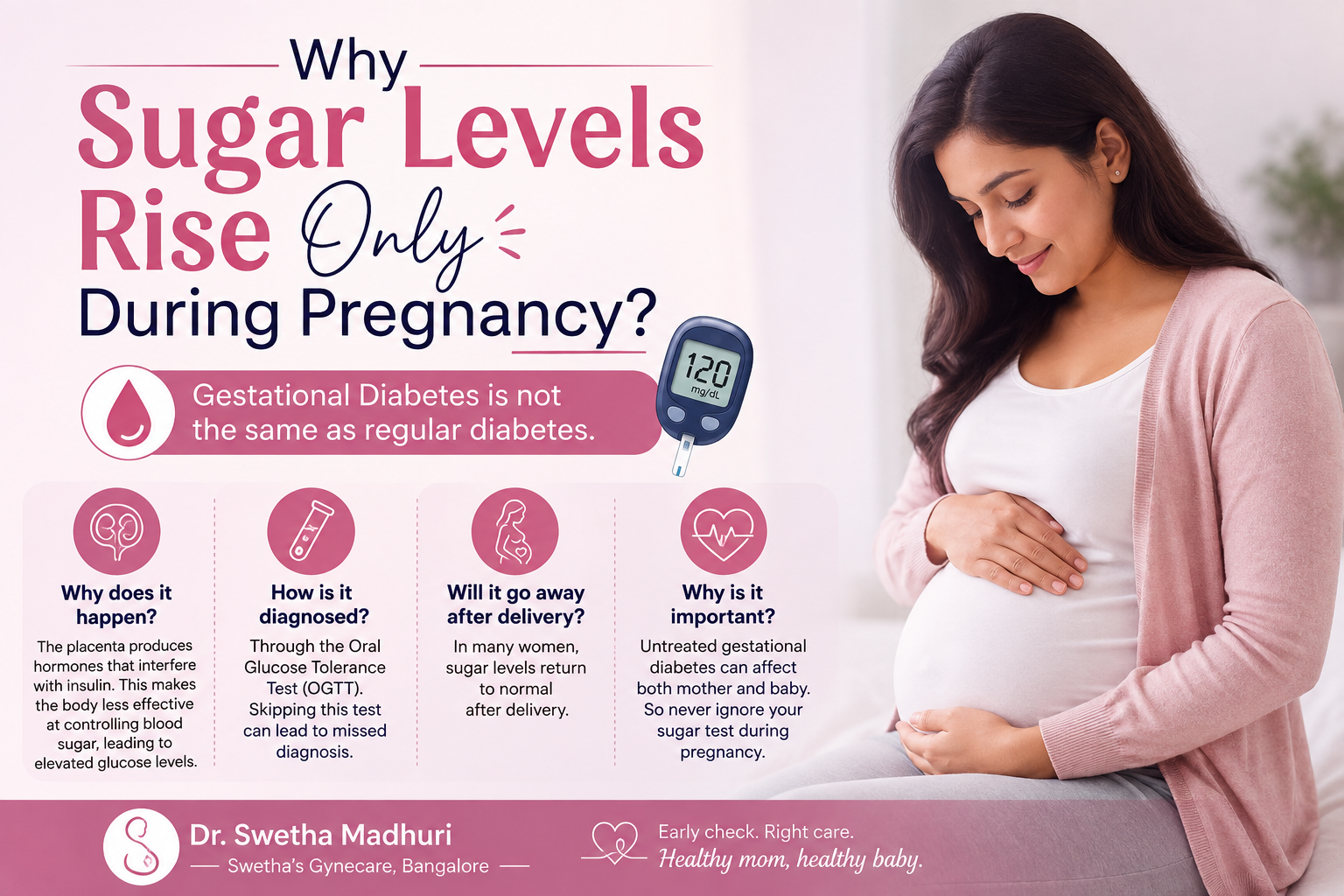
Many women are surprised when they are told they have high blood sugar during pregnancy. A common question they ask is:
“My sugar levels were always normal before pregnancy. Why is this happening now?”
The answer is that gestational diabetes is different from regular diabetes. It develops only during pregnancy and can affect women who have never had diabetes before.
Understanding why it happens and why testing is important can help you have a healthier pregnancy for both you and your baby.
What Is Gestational Diabetes?
Gestational diabetes is a type of diabetes that develops during pregnancy. It causes blood sugar levels to become higher than normal, even if you have never had diabetes in the past.
Many women feel perfectly healthy and may not notice any symptoms. That is why routine screening during pregnancy is so important.
The good news is that with early diagnosis and proper treatment, most women have a healthy pregnancy and deliver healthy babies.
Why Does It Happen?
During pregnancy, the placenta produces several hormones that help your baby grow and develop.
However, these same hormones can make it harder for your body’s insulin to work effectively. This condition is called insulin resistance.
Insulin is the hormone that helps move sugar from your blood into your body’s cells for energy. When insulin cannot work properly, sugar starts building up in the bloodstream, causing blood glucose levels to rise.
Your pancreas tries to produce more insulin to keep up with the increased demand. In some women, this extra insulin is enough. In others, the body cannot produce enough insulin, leading to gestational diabetes.
This is why blood sugar levels may become high during pregnancy, even though they were completely normal before.
Who Is More Likely to Develop Gestational Diabetes?
Any pregnant woman can develop gestational diabetes, but the risk may be higher if you:
- Are overweight before pregnancy
- Have a family history of diabetes
- Had gestational diabetes in a previous pregnancy
- Previously delivered a large baby
- Have hormonal conditions such as PMOS
- Are above 25–30 years of age
Even if none of these risk factors are present, gestational diabetes can still occur. That’s why screening is recommended for all pregnant women.
How Is Gestational Diabetes Diagnosed?
The most reliable way to diagnose gestational diabetes is through the Oral Glucose Tolerance Test (OGTT).
This test measures how your body processes sugar after drinking a glucose solution.
It is usually performed between 24 and 28 weeks of pregnancy, although your doctor may recommend earlier testing if you have additional risk factors.
Many women skip this test because they feel healthy. However, gestational diabetes often develops without any noticeable symptoms, so testing is the only way to detect it early.
Why Is Early Diagnosis Important?
When gestational diabetes is diagnosed early, it can usually be managed successfully with healthy eating, regular physical activity, blood sugar monitoring, and medication or insulin if needed.
Without proper treatment, high blood sugar can affect both the mother and the baby.
Possible complications include:
- High birth weight (large baby)
- Difficult delivery
- Increased chance of cesarean section
- Low blood sugar in the baby after birth
- Premature delivery
- High blood pressure during pregnancy
Managing blood sugar levels throughout pregnancy greatly reduces these risks.
Does Gestational Diabetes Go Away After Delivery?
For many women, yes.
After the baby is born and the placenta is delivered, hormone levels return to normal. As a result, blood sugar levels usually return to normal within a few weeks after delivery.
However, women who have had gestational diabetes have a higher chance of developing Type 2 diabetes later in life.
This is why your doctor may recommend a follow-up blood sugar test a few weeks after delivery and regular health check-ups in the future.
Can Gestational Diabetes Be Managed?
Absolutely.
Most women with gestational diabetes go on to have healthy pregnancies with proper care.
Treatment may include:
- Following a balanced pregnancy diet
- Staying physically active as advised by your doctor
- Monitoring blood sugar levels regularly
- Taking medication or insulin if required
- Attending regular antenatal check-ups
The key is early diagnosis and consistent follow-up throughout pregnancy.
Take Care of Yourself and Your Baby
Gestational diabetes is common, but it should never be ignored. A simple blood sugar test during pregnancy can help identify the condition early and prevent complications for both mother and baby.
At Swetha’s Gynecare, Dr. Swetha Madhuri provides comprehensive pregnancy care, including screening and management of gestational diabetes. With timely diagnosis, personalized treatment, and regular monitoring, we help expectant mothers enjoy a safer pregnancy and give their babies the healthiest possible start in life. If you have questions about your pregnancy or your blood sugar levels, schedule a consultation with Dr. Swetha Madhuri at Swetha’s Gynecare for expert guidance and compassionate care.
