
 Book Appointment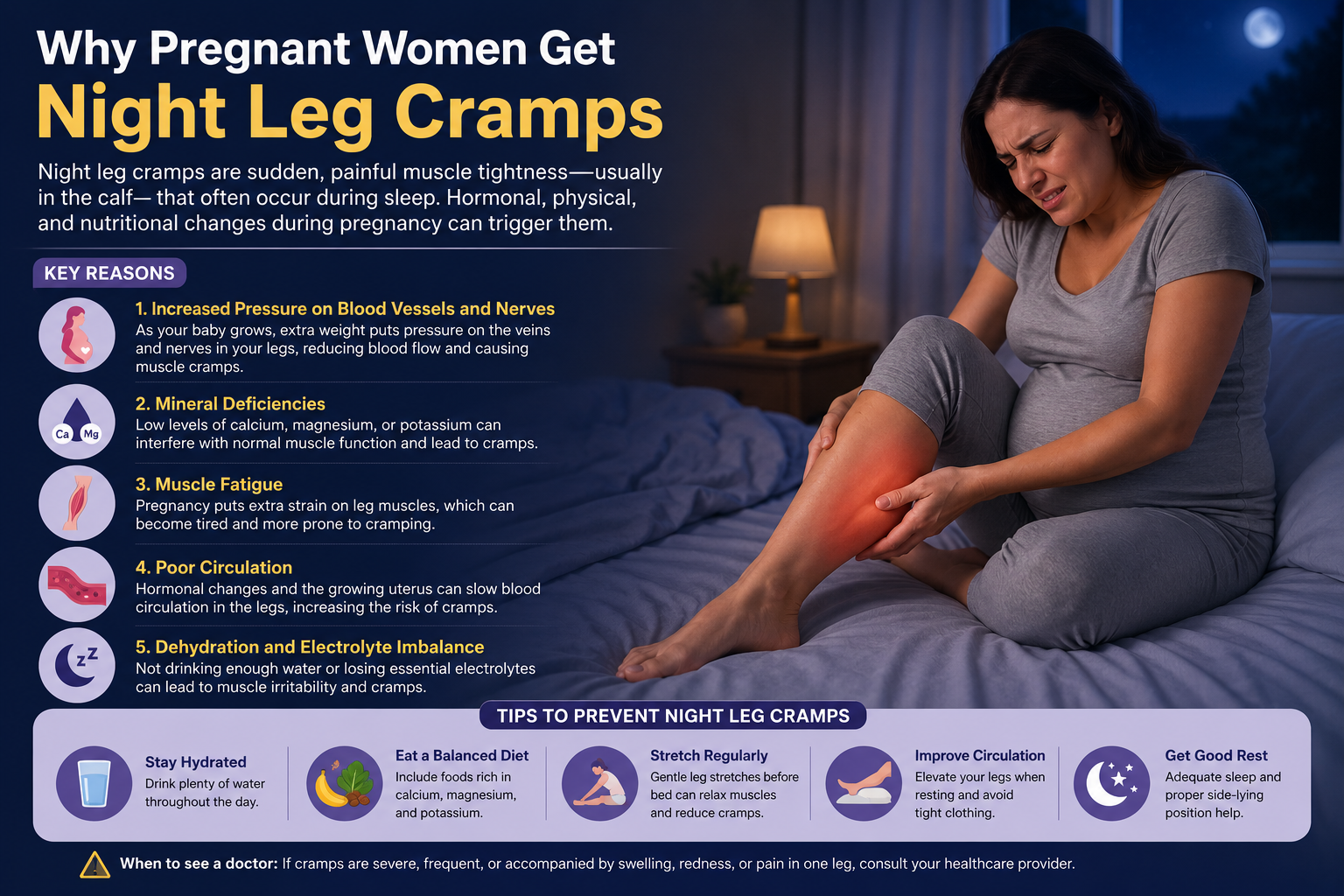
Pregnancy brings many exciting changes, but it can also come with a few unexpected discomforts. One common complaint that many expectant mothers experience is waking up in the middle of the night with a sudden, painful leg cramp.
If you’ve ever been fast asleep and suddenly felt your calf muscle tighten painfully, you’re not alone. Night leg cramps are very common during pregnancy, especially during the second and third trimesters. While they can be uncomfortable, understanding why they happen can help you manage them more effectively.
What Are Night Leg Cramps?
Night leg cramps are sudden, involuntary muscle contractions that usually occur in the calf muscles. These cramps can last for a few seconds or several minutes and may leave the muscle feeling sore afterward.
Many pregnant women describe the pain as sharp, intense, and strong enough to wake them from sleep.
Why Do Pregnant Women Get Night Leg Cramps?
Although there isn’t a single confirmed cause, several pregnancy-related factors can contribute to leg cramps.
- Increased Pressure on Nerves and Blood Vessels
As your baby grows, the uterus expands and places additional pressure on nearby nerves and blood vessels. This can affect circulation in the legs and may increase the likelihood of muscle cramps.
- Changes in Body Weight
Pregnancy naturally causes weight gain, which places extra strain on the muscles and joints. Your leg muscles work harder to support your changing body, making them more prone to fatigue and cramping.
- Dehydration
Not drinking enough fluids can contribute to muscle cramps. During pregnancy, your body requires more water to support both you and your growing baby. Even mild dehydration can affect muscle function.
- Mineral Deficiencies
Calcium, magnesium, and potassium play important roles in muscle health. Low levels of these essential minerals may contribute to muscle cramps and discomfort.
- Electrolyte Imbalance
Electrolytes help regulate muscle contractions. When electrolyte levels become imbalanced, muscles may contract unexpectedly, leading to cramps.
- Reduced Blood Circulation
Sitting or standing for long periods can affect circulation. Poor blood flow may increase muscle fatigue and trigger nighttime cramps.
When Are Leg Cramps Most Common?
Night leg cramps can occur at any stage of pregnancy, but they are most frequently reported during the second and third trimesters when the baby’s growth accelerates and the body undergoes greater physical changes.
Many women notice that cramps become more frequent as they approach the later months of pregnancy.
How Can You Prevent Night Leg Cramps?
While it may not be possible to prevent every cramp, there are several simple steps that may help reduce their frequency.
Stay Hydrated
Drink plenty of water throughout the day. Proper hydration supports healthy muscle function and circulation.
Stretch Before Bed
Gentle stretching of the calf muscles before sleep can help relax the muscles and reduce the chances of nighttime cramps.
Stay Active
Light physical activities such as walking or pregnancy-safe exercises can improve circulation and keep muscles flexible.
Include Healthy Sources of Minerals
A balanced diet rich in calcium, magnesium, and potassium may help support muscle health. Your doctor may also recommend supplements if needed.
Try Coconut Water or Lemon Water
Natural electrolyte-rich drinks can help maintain fluid and mineral balance in the body.
Choose a Comfortable Sleeping Position
Sleeping on your left side is often recommended during pregnancy because it improves blood circulation. Using a pregnancy pillow for support may also help reduce discomfort.
What Should You Do When a Cramp Occurs?
If you wake up with a leg cramp, gently straighten your leg and slowly flex your foot toward your body. Massaging the affected muscle and applying a warm compress may also help relieve the pain.
Avoid sudden movements, as they can sometimes worsen the cramp.
When Should You See a Doctor?
Occasional leg cramps are usually normal during pregnancy. However, you should consult your doctor if you experience:
- Severe or persistent pain
- Swelling in one leg
- Redness or warmth in the affected area
- Difficulty walking
- Frequent cramps that interfere with daily life
These symptoms may require further evaluation.
Night leg cramps can be frustrating, especially when they interrupt much-needed sleep during pregnancy. Fortunately, they are a common part of pregnancy and are often manageable with simple lifestyle changes such as staying hydrated, stretching regularly, maintaining healthy mineral levels, and getting appropriate prenatal care.
If you are experiencing frequent pregnancy discomforts or have concerns about your symptoms, speaking with your healthcare provider can help ensure a healthy and comfortable pregnancy journey for both you and your baby.
