
 Book Appointment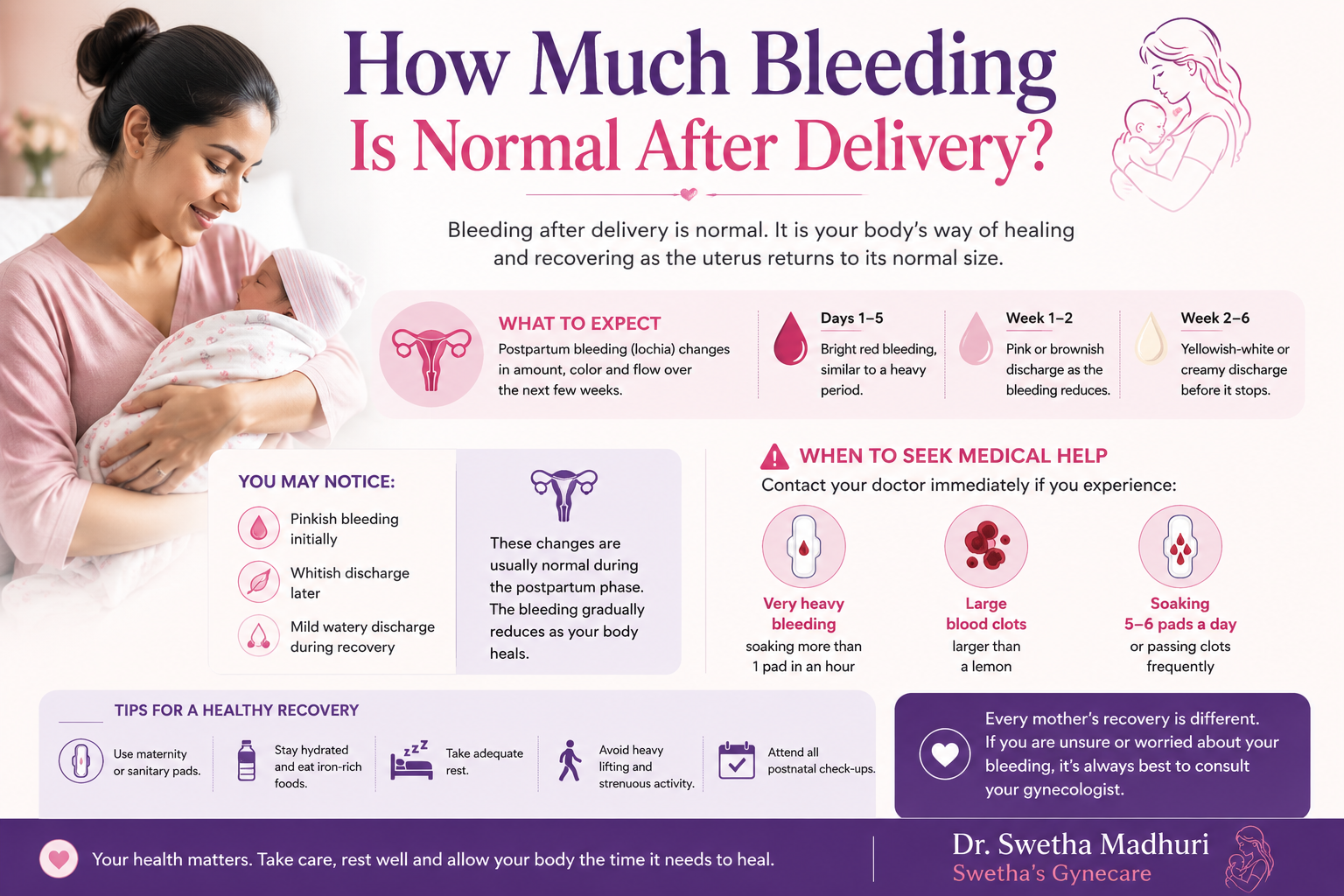
Bringing a baby into the world is a life-changing experience, and your body needs time to recover. One of the most common questions new mothers ask is, “How much bleeding is normal after delivery?” Understanding what to expect can help you feel more confident during your postpartum recovery.
What Is Postpartum Bleeding?
Bleeding after childbirth, known as lochia, is a natural part of the healing process. After delivery, your uterus sheds the remaining blood, tissue, and mucus as it gradually returns to its pre-pregnancy size. This process usually lasts for 4 to 6 weeks, although the amount and color of the discharge change over time.
What Is Considered Normal?
For the first 3 to 5 days, the bleeding is usually similar to a heavy menstrual period. You may notice small clots and need to change your sanitary pad regularly.
As the days pass, the bleeding gradually becomes lighter and changes in color:
- Days 1–5: Bright red bleeding, similar to a heavy period.
- Week 1–2: Pink or brownish discharge as the bleeding reduces.
- Week 2–6: Yellowish-white or creamy discharge before stopping completely.
You may also notice that bleeding becomes slightly heavier after breastfeeding or physical activity. This is often normal because the uterus contracts during these times.
When Should You Be Concerned?
While postpartum bleeding is expected, excessive bleeding is not normal and requires immediate medical attention.
Contact your doctor immediately if you experience:
- Soaking more than one pad every hour for two or more consecutive hours.
- Passing large blood clots (larger than a lemon).
- Bright red bleeding that becomes heavy again after it had already reduced.
- Foul-smelling discharge.
- Fever, chills, or severe abdominal pain.
- Dizziness, weakness, or feeling faint.
These symptoms may indicate postpartum hemorrhage or an infection, both of which require prompt medical care.
Tips for a Healthy Recovery
To support your recovery after childbirth:
- Use maternity or sanitary pads instead of tampons.
- Stay well hydrated and eat nutritious foods rich in iron.
- Take adequate rest whenever possible.
- Avoid lifting heavy objects during the early recovery period.
- Attend all scheduled postnatal check-ups with your gynecologist.
Every Mother’s Recovery Is Different
Every woman heals at her own pace. Some mothers stop bleeding within four weeks, while others may experience light spotting for a little longer. The key is that the bleeding should gradually decrease, not become heavier over time.
If you are ever unsure whether your postpartum bleeding is normal, it is always best to consult your gynecologist. Early evaluation can provide reassurance and help identify any complications before they become serious.
Take Care of Yourself After Delivery
Your recovery is just as important as your baby’s health. Understanding what is normal after childbirth helps you recover with confidence and recognize when you need medical attention. Never ignore heavy bleeding or unusual symptoms—timely care can make all the difference.
Dr. Swetha Madhuri
Swetha’s Gynecare – Compassionate Women’s Healthcare at Every Stage of Life.
