 Book Appointment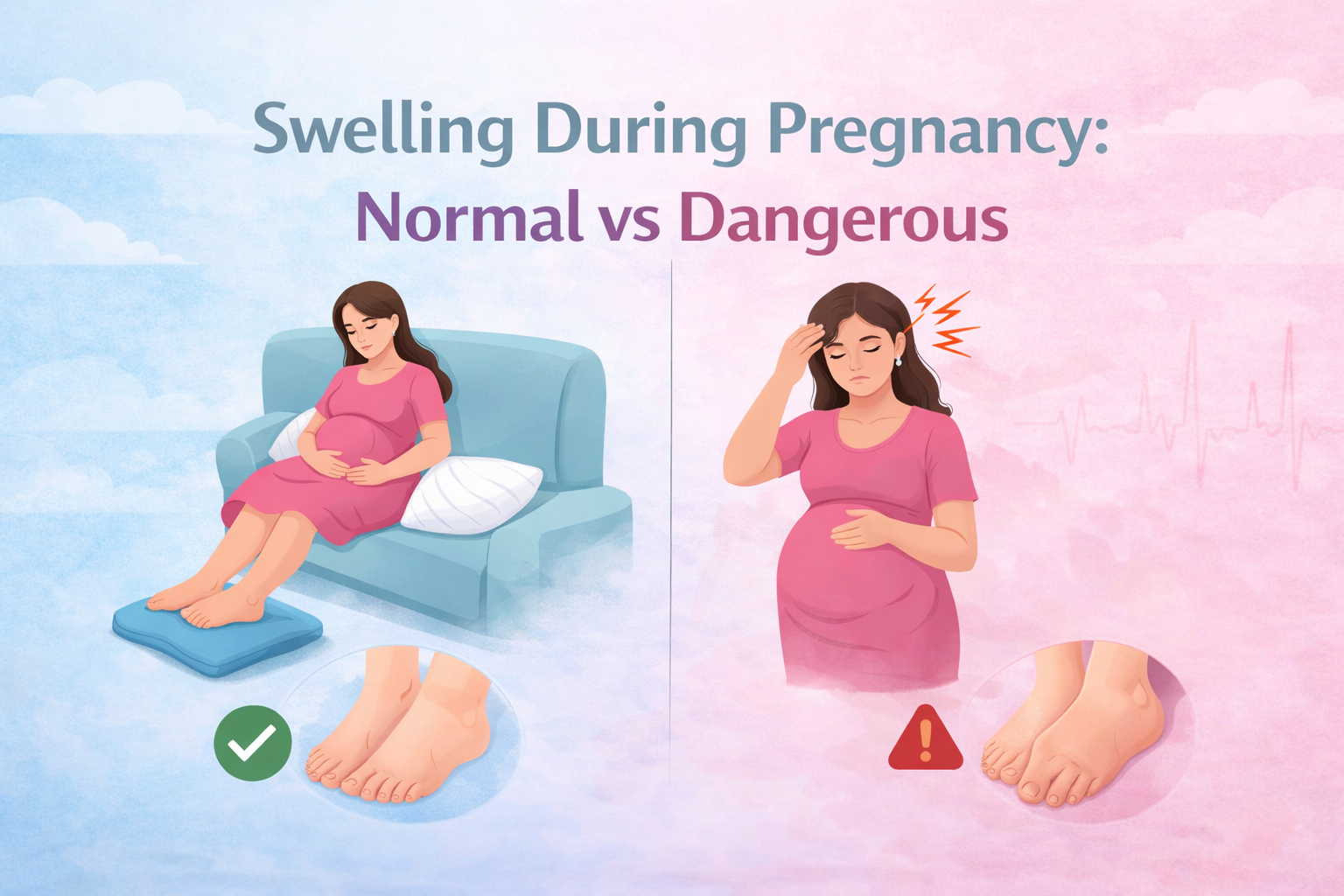
Pregnancy brings many changes to a woman’s body, and swelling is one of the most common experiences. Many pregnant women notice swelling in their feet, ankles, hands, or face — especially during the second and third trimesters.
While some swelling is completely normal, in certain cases it may indicate a serious condition that needs medical attention. Understanding the difference between normal and dangerous swelling can help you stay safe and stress-free during your pregnancy journey.
Why Does Swelling Happen During Pregnancy?
Swelling, also called edema, happens because your body produces extra fluids to support you and your growing baby. During pregnancy:
- Your blood volume increases.
- Your body retains more fluids.
- The growing uterus puts pressure on veins, slowing blood return from the lower body.
- Hormonal changes affect fluid balance.
All of this can cause swelling, especially in the legs and feet.
Normal Swelling During Pregnancy
Normal swelling usually:
- Appears gradually.
- Affects both feet or ankles equally.
- Increases towards the evening.
- Gets worse after standing for long periods.
- Improves after rest or elevating your legs.
Mild swelling in the hands and face can also occur, especially in later months.
This type of swelling is common and usually not harmful.
When Is Swelling Considered Dangerous?
Sometimes swelling may signal a medical concern, especially preeclampsia, a serious pregnancy complication related to high blood pressure.
Warning signs to watch for:
- Sudden swelling in the face or around the eyes
- Severe swelling in hands
- Rapid weight gain within a few days
- Headache that doesn’t go away
- Blurred vision or seeing spots
- Upper abdominal pain
- High blood pressure readings
If swelling appears suddenly or is associated with any of the above symptoms, you should contact your doctor immediately.
What Is Preeclampsia?
Preeclampsia is a condition that usually occurs after 20 weeks of pregnancy. It involves:
- High blood pressure
- Protein in urine
- Swelling (sometimes sudden)
If not treated in time, it can affect both mother and baby. Regular prenatal check-ups help detect this condition early.
Tips to Reduce Normal Swelling
If your swelling is mild and normal, here are some simple steps to manage it:
✔ Avoid standing for long periods
✔ Elevate your legs whenever possible
✔ Sleep on your left side
✔ Drink plenty of water
✔ Reduce excess salt intake
✔ Wear comfortable footwear
✔ Do gentle pregnancy-safe exercises
✔ Avoid tight rings or bracelets
Light walking and prenatal yoga can also help improve circulation.
When to Call Your Doctor
Always call your doctor if:
- Swelling is sudden and severe
- One leg is more swollen than the other (especially with pain)
- You have chest pain or difficulty breathing
- You feel severe headache or vision changes
It is always better to check and stay safe rather than ignore symptoms.
Final Thoughts
Swelling during pregnancy is common and usually harmless. However, knowing the difference between normal and dangerous swelling helps protect both mother and baby.
Regular check-ups, healthy lifestyle habits, and open communication with your doctor ensure a smooth and safe pregnancy journey.
If you have any concerns about swelling or other pregnancy symptoms, consult your gynecologist for proper evaluation and guidance.
For expert and compassionate pregnancy care, you can consult Dr. Swetha Madhuri at Swetha’s Gynecare, Akshayanagar, Bengaluru, where your health and your baby’s safety are always the top priority.
